
5 Key Advantages of Switching to a Performance-Oriented Infrastructure
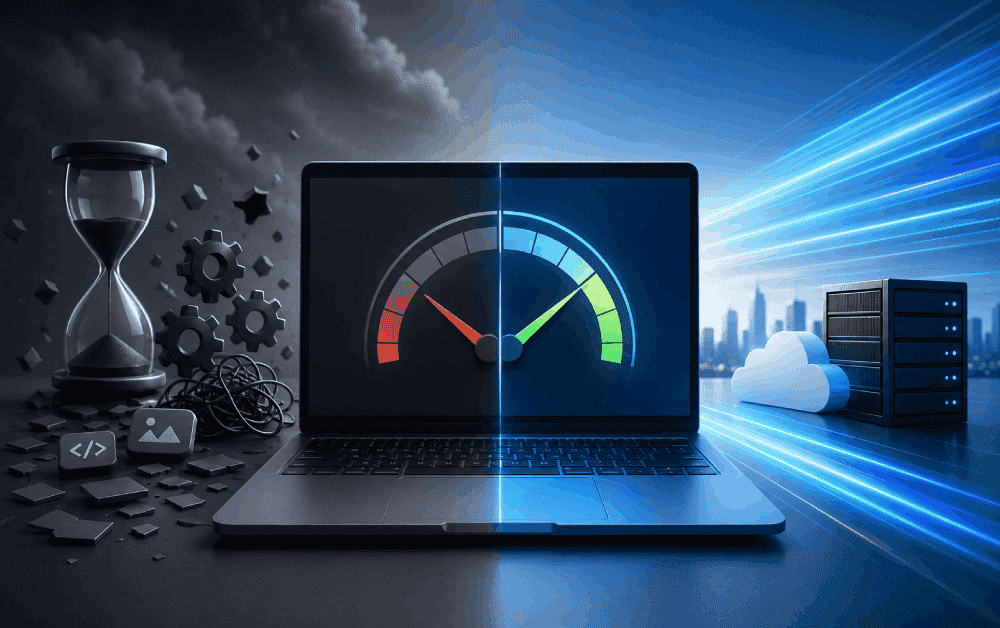
The success of a website no longer depends solely on its design or content quality. Performance is one of the most important factors that directly impacts user experience, search engine rankings, and conversion rates.
Slow-loading pages cause visitors to leave the site, while a fast-loading website generates more engagement, higher conversion rates, and a stronger brand image.
So why do websites slow down over time? And why is switching to a performance-oriented infrastructure so important?
Why Do Websites Slow Down?

Many websites run fast enough when they are first launched. However, as new content, images, plugins, and integrations are added over time, performance issues begin to emerge.
The most common reasons for slowdowns are:
- Unoptimized large images
- Unnecessary JavaScript and CSS files
- Numerous third-party integrations
- Inefficient database queries
- Outdated or inadequate server infrastructure.
- Ignoring mobile performance
- Unnecessary steps performed when creating the page
When these problems combine, page load times increase and the user experience is negatively affected.
1. You Offer a Better User Experience
First impressions are formed within seconds of a visitor arriving at your site. Fast page loading allows users to access content more easily and increases the time spent on the site.
Thanks to a performance-oriented infrastructure:
- Pages load faster.
- The navigation experience improves.
- Mobile users have easier access.
- Bounce rates decrease.
As a result, visitors spend more time on your site and engage more strongly with your brand.
2. You will achieve stronger results in search engines.
Google considers page experience and performance indicators to be important signals in search results. Metrics such as loading speed, visual stability, and user interaction, in particular, can affect the overall quality of a website.
A slow-loading website:
- They might get lower rankings.
- It can be crawled less efficiently by search engines.
- This can lead to a loss of organic traffic.
A performance-oriented infrastructure helps search engines crawl your site more efficiently and provide a more positive user experience evaluation.
3. You can increase conversion rates.
Websites are used not only to attract visitors but also to achieve specific goals. These goals might include receiving requests for quotes, selling products, having users fill out forms, facilitating communication, or creating memberships.
Even small delays in page loading time can affect users' decision-making. When a user has to wait, they may leave the page or abandon the transaction.
A faster-loading website makes it easier for users to complete transactions, increasing the likelihood of conversion.
4. You will use server resources more efficiently.
Performance is important not only for visitors but also in terms of infrastructure costs.
Inefficient systems:
- It consumes more processing power.
- It uses more memory.
- They struggle with increased traffic.
- It can increase server costs.
In performance-oriented systems, resource usage is optimized. This makes it possible to serve more visitors with the same hardware.
Especially in content-intensive projects, this advantage can lead to significant cost savings over time.
5. You will build a structure ready for future growth.
Many websites are initially planned on a small scale. However, over time, the amount of content, visitor traffic, and business needs increase.
Projects developed without considering performance start to create more problems as they grow.
A performance-oriented infrastructure is:
- You can manage more content more easily.
- It operates more stably during periods of high traffic.
- It makes it easier to add new features.
- It reduces technical problems in the long run.
This approach helps your website adapt more easily to future needs.
Conclusion
Website performance is no longer just a technical detail, but a strategic issue that directly impacts business results.
Slow-loading pages can lead to user loss, low conversion rates, and search engine visibility issues. In contrast, a performance-oriented infrastructure offers a better user experience, higher SEO success, more conversions, and a more sustainable system.
When developing a new web project or revamping your existing site, considering performance not as an issue to be resolved later, but as a fundamental part of the architecture, will provide significant long-term advantages.
Similar Content That Might Interest You



Load More Content
WEBAYT PACKAGES
Choose the Webayt package that suits your needs.
Easily determine the most suitable initial, management, and development option for your website by reviewing Webayt's content management system packages.
- Package options to suit different needs.
- Content management, SEO, and multilingual infrastructure.
- Scalable solution for corporate web projects.
ADDITIONAL SERVICE
Get professional help to keep your website up to date.
You can benefit from our professional management services for your website's content management, updates, and SEO-focused optimizations.
- Page, content and module updates
- SEO-focused content editing.
- Monthly scheduled website management.
Frequently Asked Questions
What is corporate web design?
Corporate web design is the process of designing and developing a website that professionally reflects a company's brand identity, services, and goals in the digital environment.
How long does it take to create a corporate website?
The preparation time varies depending on the scope of the project, the number of pages, design requirements, and content. A standard corporate website can usually be ready to go live within a few weeks.
What determines the price of a corporate website?
Website pricing can vary depending on design scope, number of pages, custom development needs, multilingual support, content entry, and technical specifications.
Is SEO included in the web design service?
An SEO-friendly infrastructure is a crucial part of the corporate web design process. However, regular SEO efforts, content creation, and backlink building can also be planned separately.
Can the website be updated later?
Yes. On corporate websites with a content management system, pages, blog posts, images, and other content can be easily updated later.
Is it possible to create a multilingual website?
Yes. With multilingual websites, you can publish your content in different languages and reach international users more easily.
Why is a mobile-friendly website important?
Since the majority of users access websites from mobile devices, mobile compatibility is of great importance in terms of user experience, SEO, and conversion rates.